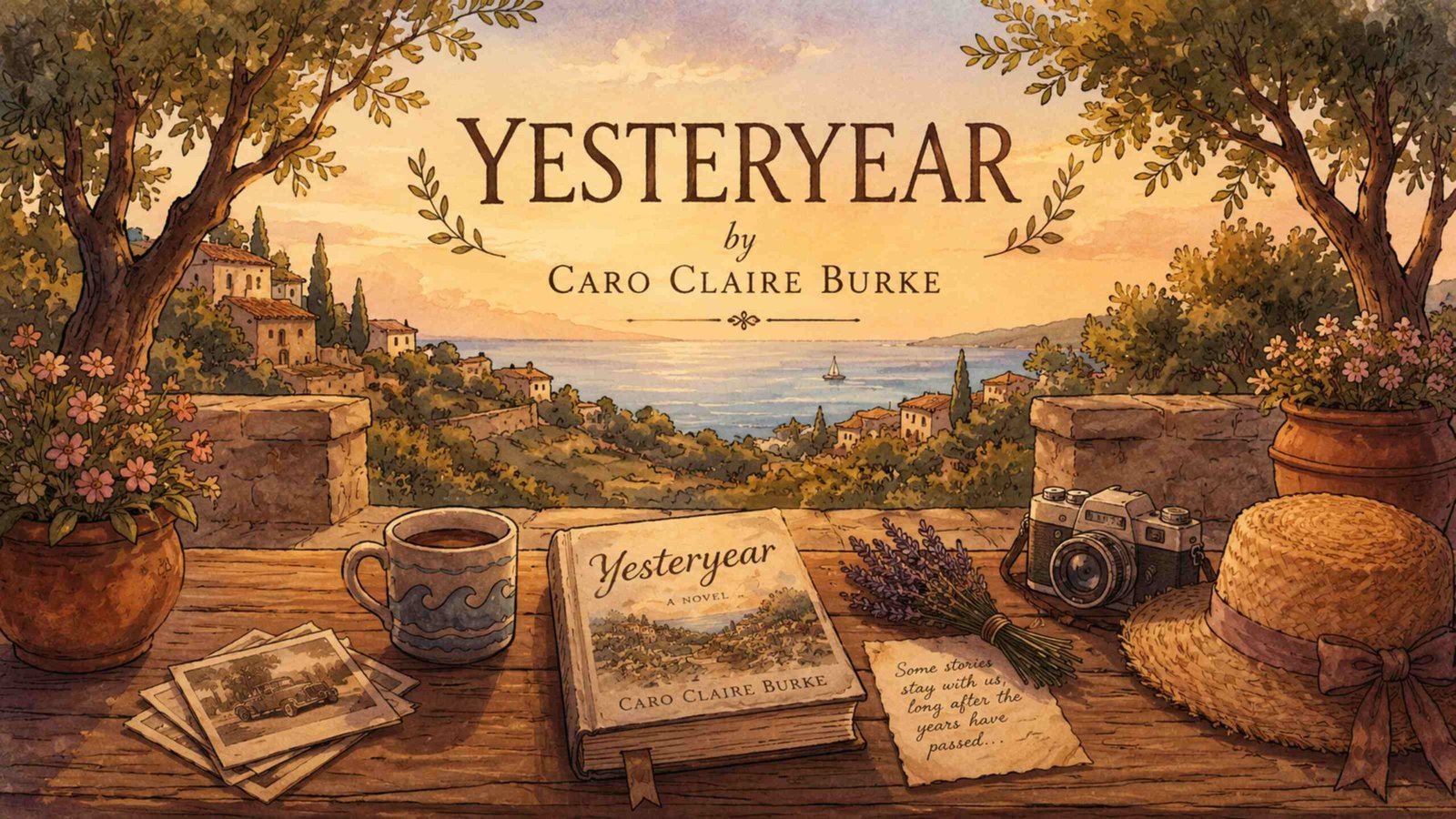
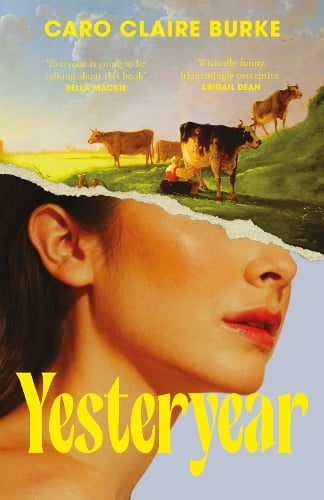
Yesteryear – Caro Claire Burke
This one has been everywhere — and for very good reason. Yesteryear is sharp, darkly funny, and utterly impossible to put down. If you’ve been seeing it all over your social feeds and wondering whether it lives up to the hype, it absolutely does. Read the book before the Anne Hathaway film arrives!
A successful “tradwife” influencer with millions of followers, a carefully curated life of homemade jam and pastoral perfection — and then she wakes up in 1855. Yesteryear is one of those rare novels that manages to be biting social satire, psychological thriller, and genuinely gripping story all at once. It is darkly funny, surprisingly moving in places, and will have your book club talking for hours.
Disclosure: This post contains affiliate links to Waterstones and Amazon. If you buy through them, I may earn a small commission at no extra cost to you.
Quick character cheat sheet
- Natalie Heller Mills — 32-year-old Instagram star and self-styled tradwife, building a brand on romanticised domesticity. Simultaneously the villain and the victim of her own story, and one of the most compelling, infuriating narrators you’ll read this year.
- Caleb Mills — Natalie’s husband; soft-handed in the present, competently rural in 1855. His role deepens considerably as the novel progresses.
- The Children — four kids who look like hers but feel like strangers; dirty, strange, and unsettling in the pioneer version of her life.
- Mary — Natalie’s daughter, whose perspective eventually becomes one of the novel’s most important emotional anchors.
- The Pioneer Family — the 1855 versions of her own people: brutal, capable, and a world away from the aesthetic she sold online.
Themes to watch
The gap between online identity and lived reality · domestic labour as gendered subjugation · the deep irony of nostalgia for a brutal past · performance and the curated self · faith, control, and the grand performance of womanhood · narcissism and its cost to the people closest to us
Content notes: This book includes child abuse and neglect, domestic abuse, animal abuse, detailed depictions of childbirth and pregnancy, mild drug use, and alcoholism. Please take care, and skip any questions your group doesn’t want to cover.
Discussion questions
Spoiler-free
- How would you describe the book’s tone — satire, thriller, dark comedy, psychological horror? Did your sense of it shift as the story went on?
- Natalie is described as simultaneously villainous and a victim. Did you find yourself rooting for her, even when she made terrible choices? What does it say about the novel that Burke makes her so compelling?
- The book is deeply critical of tradwife culture, but it also explores why that aesthetic is so appealing. What do you think it’s really selling — and to whom?
- How does the novel handle the gap between what Natalie performs online and who she actually is? Where did that gap feel most stark?
- The 1855 setting forces Natalie to do the things she only ever photographed. What did you make of watching that play out — funny, uncomfortable, satisfying?
- The book uses a dual timeline structure. Did that work for you — did the backstory sections add to the tension, or did they slow things down?
- What does Yesteryear seem to be saying about social media specifically — is it the cause of Natalie’s problems, or a symptom of something deeper?
- Faith runs through the novel in interesting ways. How does the book treat Natalie’s Christianity — with sympathy, scepticism, or something more complicated?
- Which character did you find most vivid or memorable — and why?
- Who would you recommend this book to? Who might find it difficult?
Spoiler zone
STOP HERE if anyone hasn’t finished the book.
- The twist — that Natalie and Caleb built Yesteryear themselves — fundamentally changes what the story is about. Did it land for you, or did it feel like it let the novel off the hook?
- Once we know that Natalie is, in some ways, a victim of her own mental illness, how does that change your feelings about the tradwife critique at the heart of the book?
- Mary’s ending — escaping to California, rejecting her mother’s manufactured world — is quietly hopeful. Did it feel earned?
- How did you feel about Natalie by the end? Did your sympathy shift, and if so, in which direction?
- The novel suggests that the lie Natalie built was so total, she eventually believed it herself. What does the book ultimately argue about the relationship between performance and identity?
- What do you think happens to Natalie after the final page?
Meeting plan (60–90 minutes)
- 0–10: Warm-up (describe the book in 3 words / what would your tradwife aesthetic actually look like, if you were being honest?)
- 10–50: Spoiler-free discussion
- 50–70: Spoiler zone (optional)
- 70–80: Mini activity — The Brand (each member writes 3 bullet points for Natalie’s Instagram bio, then 3 for who she actually is)
- 80–90: Ratings + vote for next month
A couple of hosting notes: the warm-up question about your own tradwife aesthetic is a good icebreaker — it gets people laughing immediately, but it also opens up a genuine conversation about why the fantasy is appealing even for people who’d never subscribe to it. The Brand activity tends to work really well for this book because it crystallises exactly what Burke is doing structurally, and usually sparks a fresh round of debate about Natalie without anyone feeling like they’re just rehashing discussion.
If you have members who are uncomfortable with the more disturbing content (the child neglect and abuse sections in particular can be upsetting), it’s worth flagging before the meeting and agreeing as a group which questions to skip.