Circe (Madeline Miller) — Book Club Discussion Guide
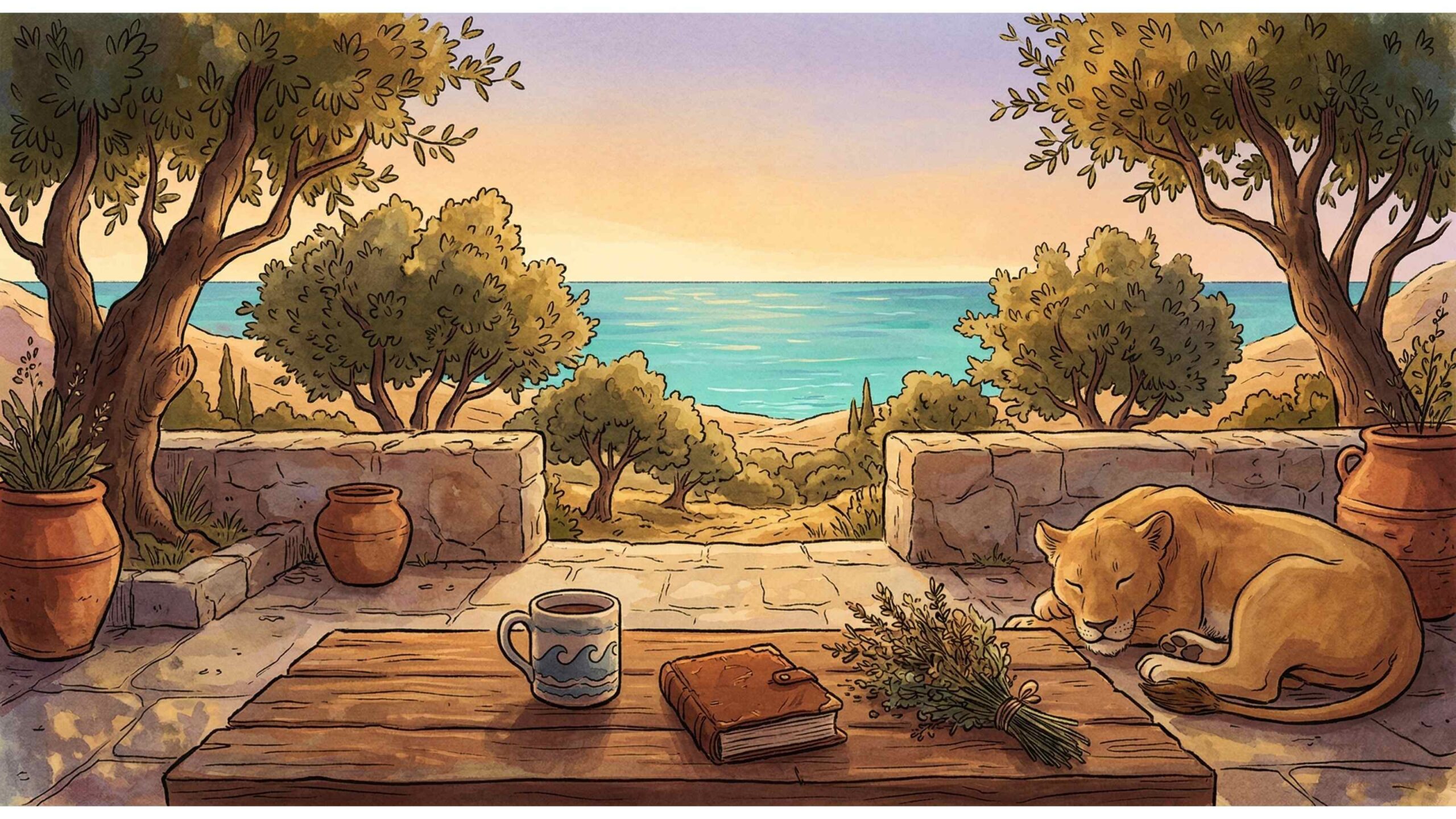
Set in the world of ancient myth, Circe follows the daughter of the sun god Helios — dismissed, exiled, and quietly extraordinary — as she discovers her power as a witch and builds a life entirely on her own terms. It’s sweeping and strange, deeply human, and one of the most quietly feminist books you’ll read wrapped inside a Greek myth.
Disclosure: This post contains affiliate links to Waterstones. If you buy through them, I may earn a small commission at no extra cost to you.
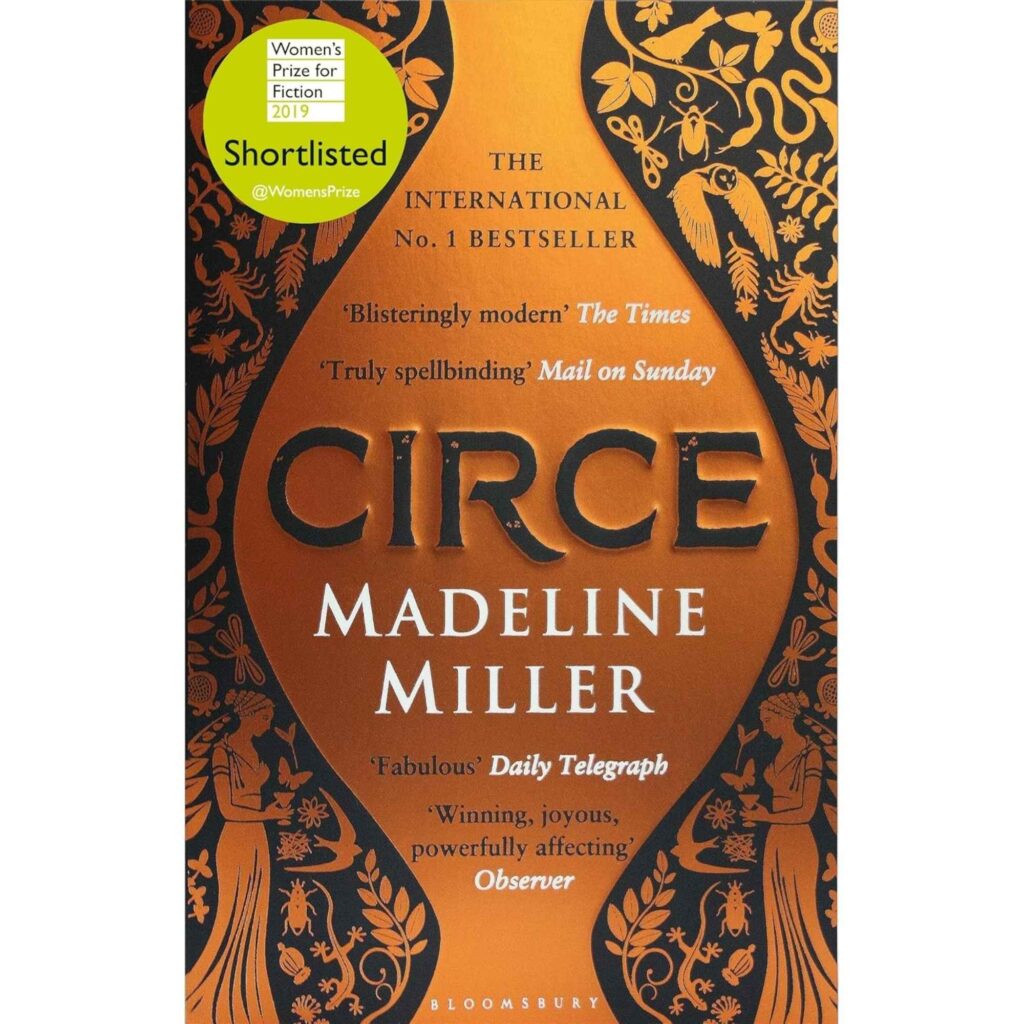
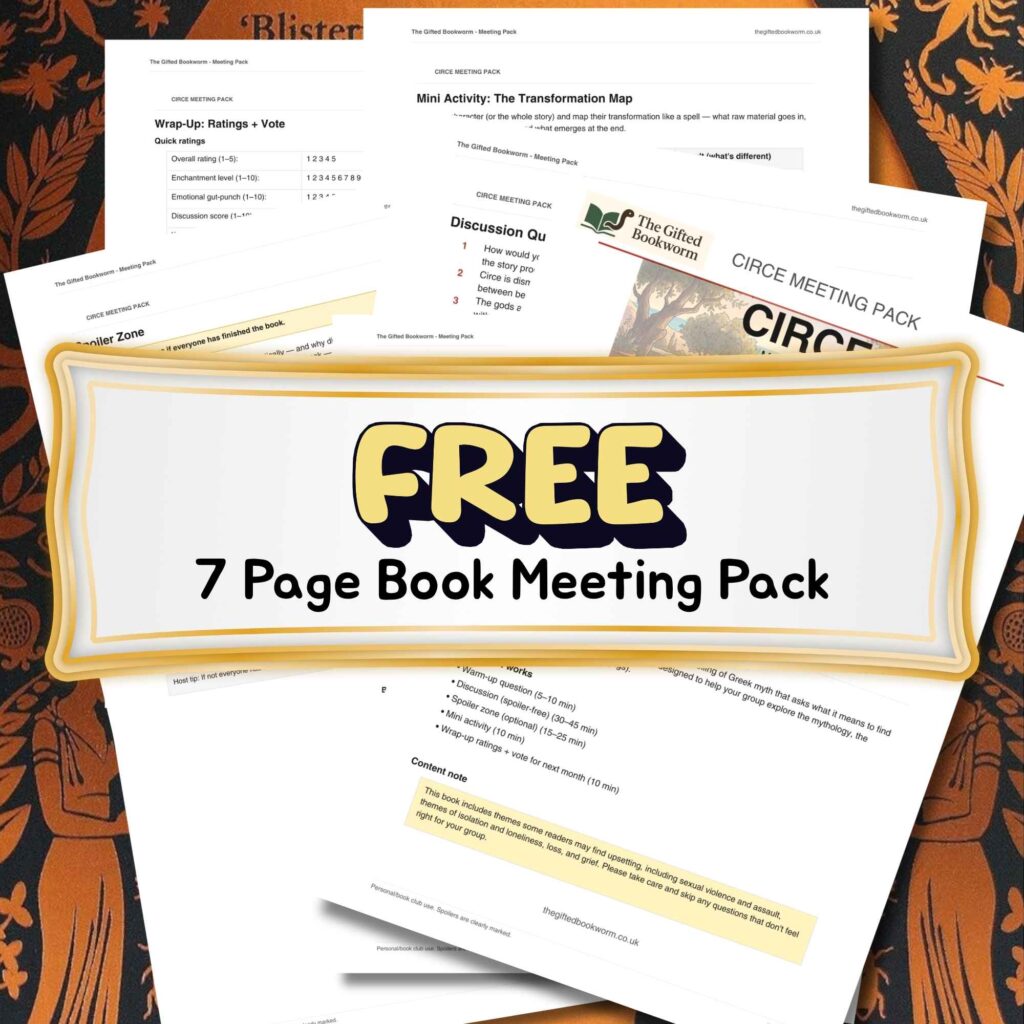
What’s inside the meeting pack (7 pages): cover sheet, welcome + content note, quick guide/characters/themes, meeting plan, spoiler-free questions, spoiler zone, mini activity (“The Transformation Map”), ratings + next-month vote.
Quick character cheat sheet
- Circe — daughter of Helios; overlooked, underestimated, and quietly transforming.
- Helios — sun god and distant father; powerful, vain, and largely indifferent.
- Pasiphae — Circe’s mother; cold, status-obsessed, and cutting.
- Aeetes — Circe’s brother; a fellow witch whose ambition dwarfs his warmth.
- Daedalus — the craftsman; one of the few genuinely kind figures Circe encounters.
- Odysseus — the famous wanderer; brilliant, pragmatic, morally complex.
- Telemachus — son of Odysseus; arrives later and changes everything.
- Medea — Circe’s niece; ruthless, brilliant, a mirror and a warning.
Themes to watch
Power and transformation · the female gaze on myth · loneliness, exile, and building a self · monstrousness (who earns the label, and who doesn’t) · mortality and what it means to be fully human
This book includes themes some readers may find upsetting, including sexual violence and assault, and themes of isolation, loss, and grief. Please take care, and skip any questions your group doesn’t want to cover.
Discussion questions
Spoiler-free
- How would you describe the book’s tone — epic, intimate, melancholy, triumphant? Did it shift as the story progressed?
- Circe is dismissed by nearly everyone at the start. How does the novel portray the relationship between being underestimated and eventually finding power?
- The gods are shown as vain, careless, and cruel. What does the book seem to argue about power without accountability?
- How does Miller use familiar myths — Odysseus, the Minotaur, Daedalus — to say something new, or something the originals didn’t?
- Circe’s witchcraft is described as labour, patience, and attention rather than inherited talent. What does that choice suggest?
- Which relationship in the book felt most significant to you — and why?
- The book asks: who gets to be the hero of their own story? Where did you see that playing out?
- How did you feel about Circe’s relationship with mortals versus immortals? What does mortality represent in the novel?
- Did the story feel like myth, literary fiction, feminist retelling — or something else entirely? Does the label matter?
- Who would you recommend this book to — and who might not enjoy the style or pace?
Spoiler zone
STOP HERE if anyone hasn’t finished the book.
- Which moment changed Circe most dramatically — and why did it land so hard?
- How does Circe’s use of her power evolve across the book — and what does that arc say about growth and self-knowledge?
- What did you make of the ending? Did it feel earned, surprising, too neat, or something else?
- How did your understanding of Odysseus shift — and what does Circe’s perspective add to how we usually read him?
- Which relationship transformed the most by the end — and what acted as the catalyst?
- What do you think the book ultimately argues: that power is liberation, responsibility, or both?
Meeting plan (60–90 minutes)
- 0–10: Warm-up (describe in 3 words / did you know the myths before reading?)
- 10–50: Spoiler-free discussion
- 50–70: Spoiler zone (optional)
- 70–80: Mini activity — The Transformation Map (Catalyst → Reaction → Result)
- 80–90: Ratings + vote for next month
A couple of notes on hosting this one: it works really well to open with the warm-up question about prior myth knowledge, as it levels the playing field quickly — some people will have studied Classics, others will know nothing, and neither matters for enjoying the book. If your group is up for it, the spoiler zone questions about Odysseus tend to spark the liveliest debate.
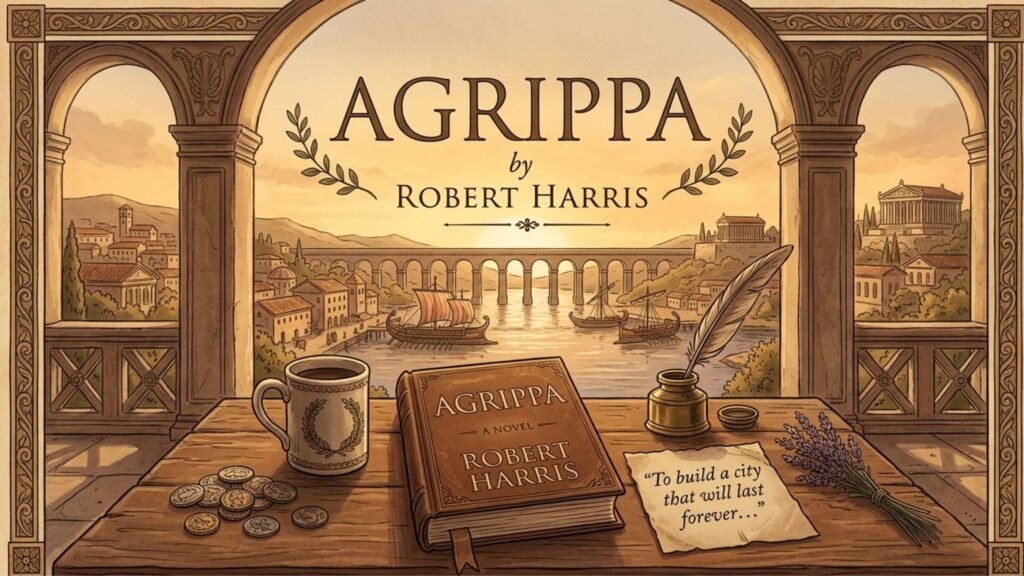
Agrippa
by Robert Harris — Book Club Discussion Guide Julius Caesar has just been murdered, and…
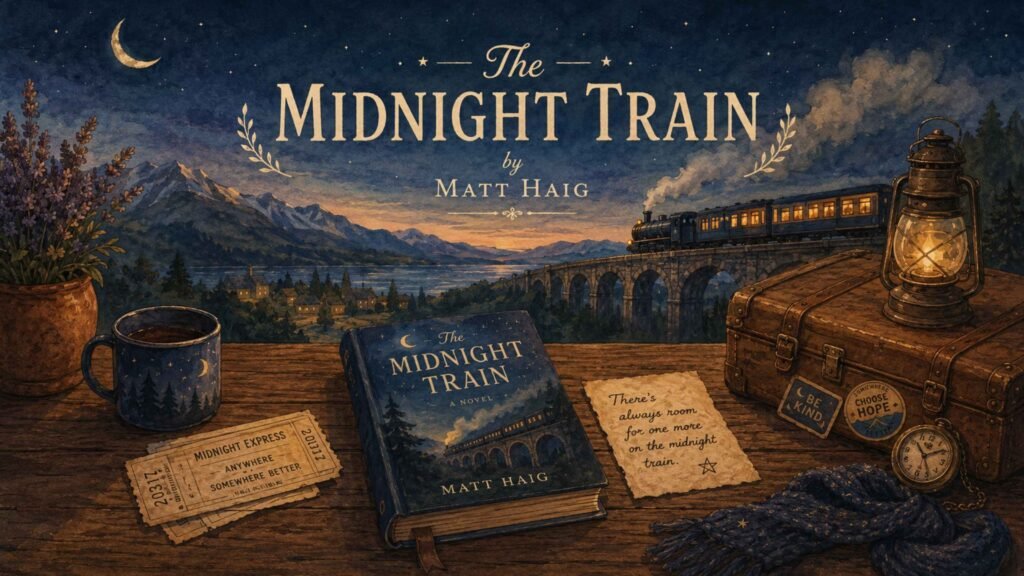
The Midnight Train discussion guide
By Gifted Bookworm Wilbur is 81, newly widowed-in-spirit from a marriage that ended decades ago,…
Yesteryear – Caro Claire Burke
This one has been everywhere — and for very good reason. Yesteryear is sharp, darkly…

Remarkably Bright Creatures – Shelby Van Pelt
Categories: Blogging | Monthly Picks You may have noticed that this has just come out…
Circe (Madeline Miller) — Book Club Discussion Guide
Set in the world of ancient myth, Circe follows the daughter of the sun god…
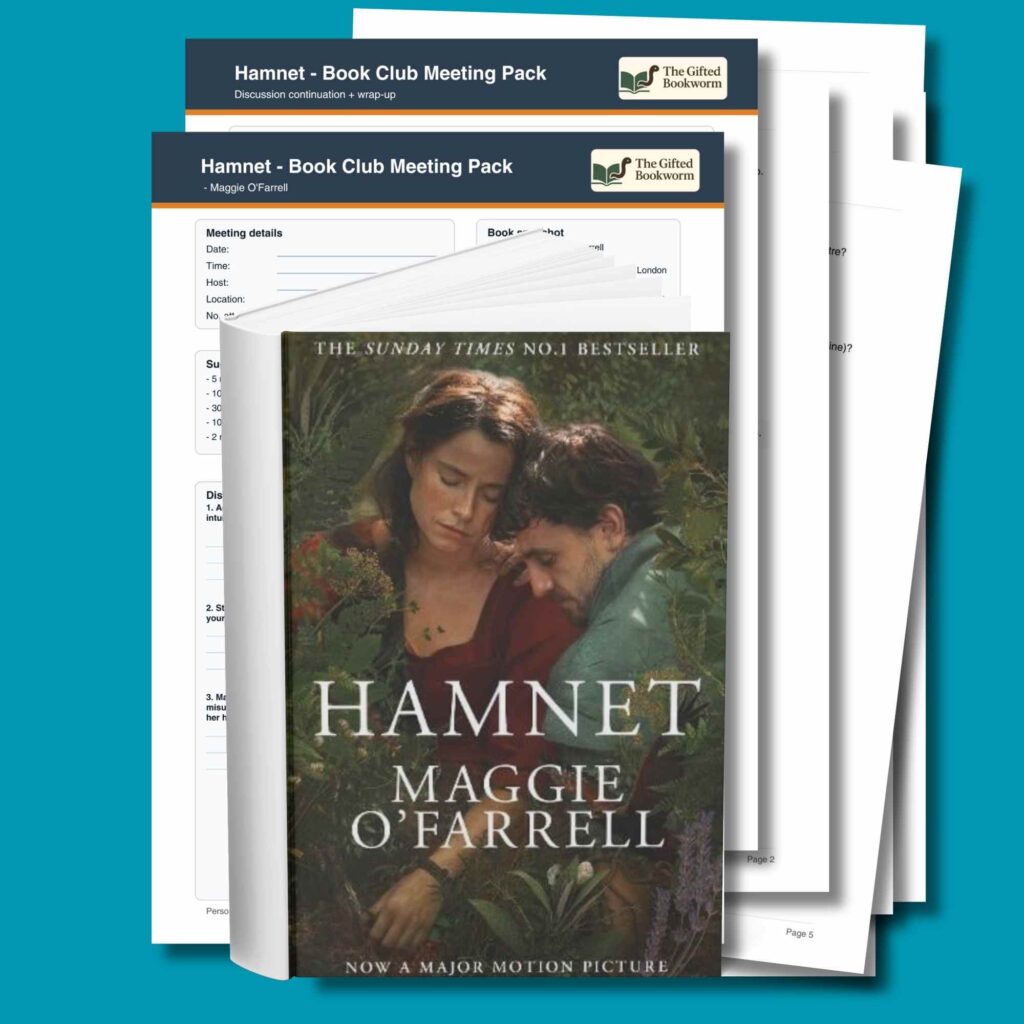
Hamnet (Maggie O’Farrell) — Book Club Discussion Guide
Quick refresher (spoiler-light) A lyrical, character-led novel centred on Agnes (Shakespeare’s wife, never named as…