
Lessons in Chemistry discussion guide
Set in 1960s Southern California, Lessons in Chemistry follows Elizabeth Zott, a brilliant chemist whose career is derailed — before she becomes an unlikely TV cooking star and uses her platform to challenge the era’s expectations. It’s funny, fierce, and surprisingly tender.
Disclosure: This post contains affiliate links to Waterstones. If you buy through them, I may earn a small commission at no extra cost to you
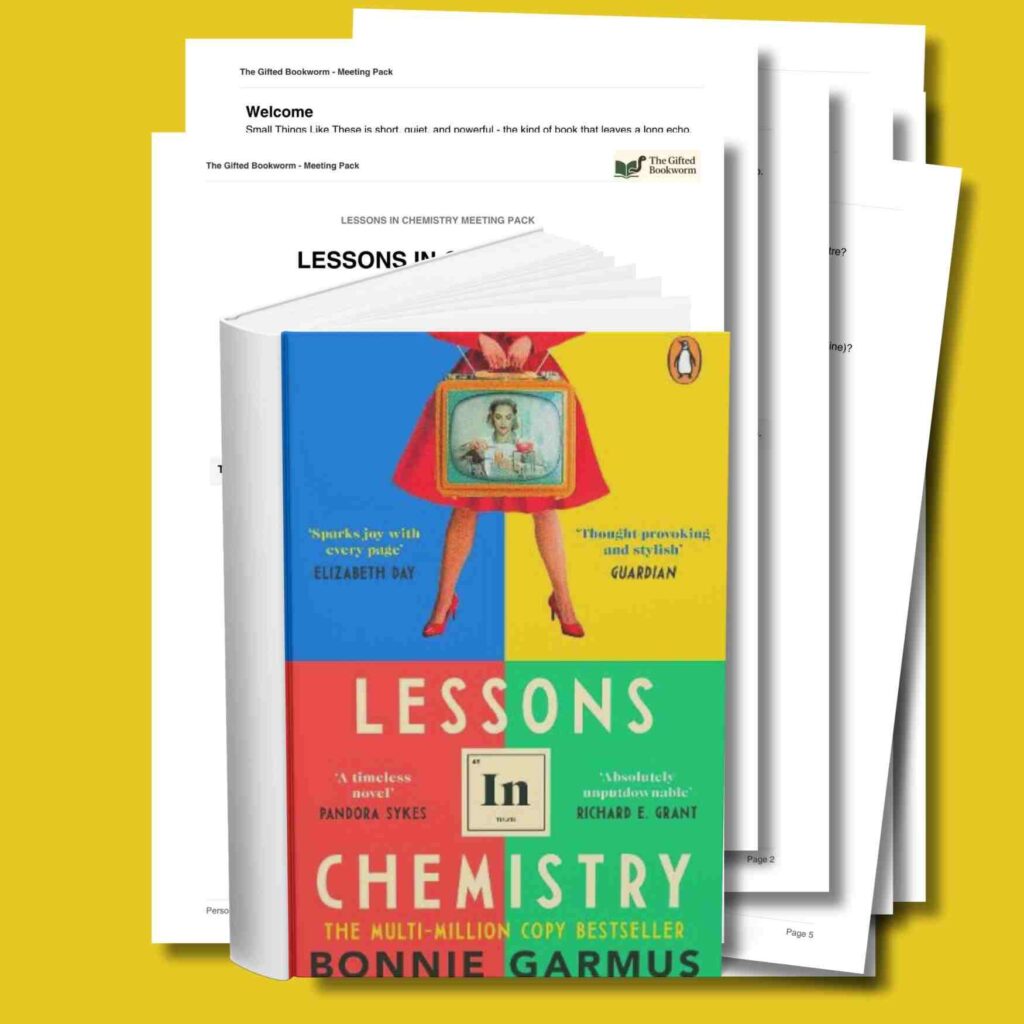
What’s inside (8 pages): cover sheet, welcome + content note, quick guide/characters/themes, meeting plan, spoiler-free questions, spoiler zone, mini activity (“Chemistry of Change”), ratings + next-month vote.
Quick character cheat sheet
- Elizabeth Zott — chemist; blunt, principled, refuses to be diminished.
- Calvin Evans — scientist; key relationship in Elizabeth’s life.
- Mad (Madeline) — Elizabeth’s daughter.
- Six-Thirty — the dog (yes, he’s a scene-stealer).
- Harriet Sloane — neighbour who becomes an important support.
Themes to watch
Gender and power at work • being underestimated • grief and love • chosen family • science as truth (and metaphor) • motherhood and autonomy
This book includes themes some readers may find upsetting, including misogyny and sexual harassment/assault, plus grief and loss. Please take care, and skip any questions your group doesn’t want to cover.
Discussion questions
Spoiler-free
- Describe the book in three words — then compare answers.
- Did the tone work for you (satirical/funny/angry/hopeful) or did it ever feel too “big” for the story?
- Elizabeth’s directness: refreshing, unrealistic, exhausting, inspiring — or a mix?
- Where did you notice sexism shown most powerfully: big events, small daily cuts, or systems?
- The title: what are the “lessons” here — and who is learning them?
- Where does the book use “chemistry” (literally or metaphorically) to talk about people and relationships?
- Which supporting character mattered most to you — and why?
- What did you make of the cooking show as a platform: empowering, ironic, both?
- Who gets believed in this story — and what does it cost to be disbelieved?
- Who would you recommend this to — and who might not enjoy the tone?
Spoiler zone
STOP HERE if anyone hasn’t finished the book.
- Which event changed Elizabeth’s path most dramatically — and why did it land so hard?
- How does grief reshape Elizabeth, and where does she resist being reshaped?
- Which relationship transformed the most by the end — and what acted as the “catalyst”?
- Did the ending feel satisfying, too neat, too chaotic, perfectly earned?
- If you could rewrite one “rule” of the world Elizabeth lives in, what would you change?
- What do you think the book ultimately argues: change is personal, political, or both?
Meeting plan (60–90 minutes)
- 0–10: Warm-up (3-word vibe / title meaning)
- 10–50: Spoiler-free discussion
- 50–70: Spoiler zone (optional)
- 70–80: Mini activity: Chemistry of Change (Catalyst → Reaction → Result)
- 80–90: Ratings + vote for next month




One Comment
Comments are closed.