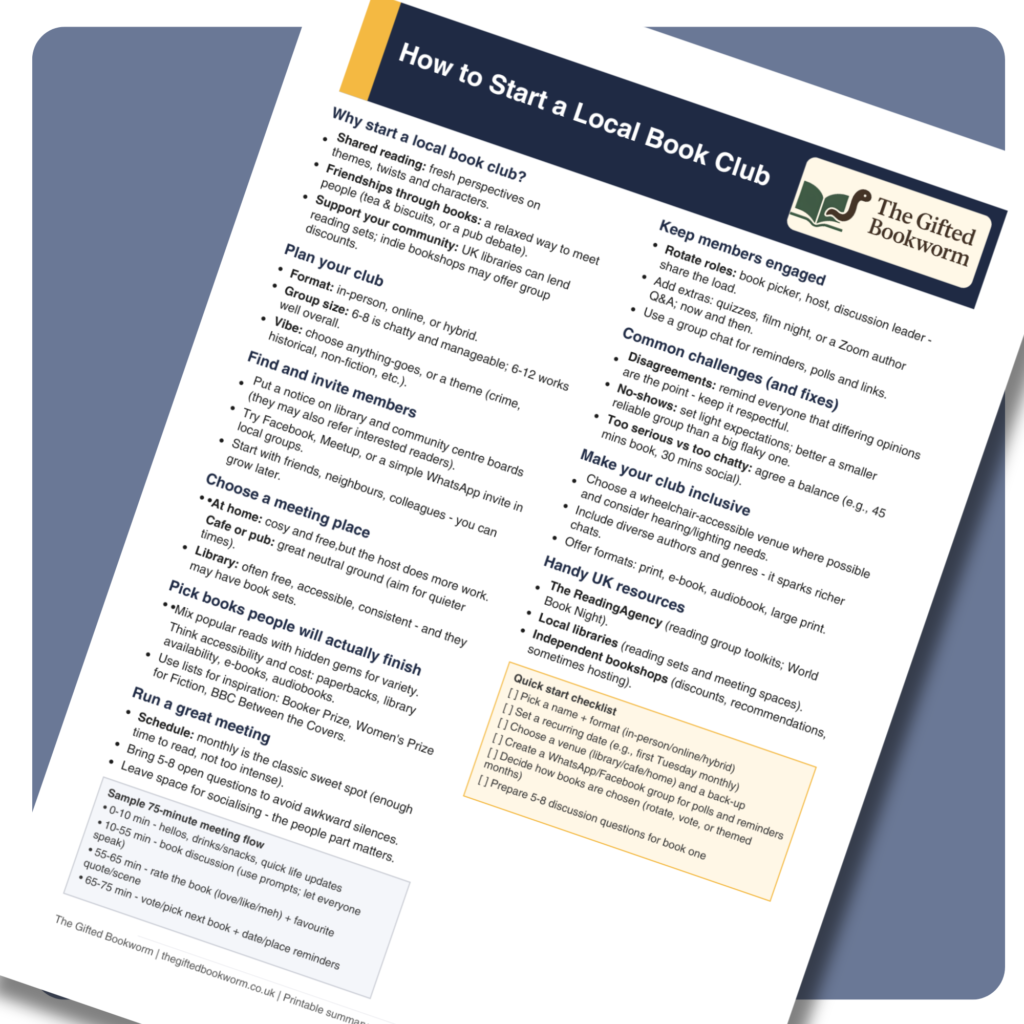
How to Start a Local Book Club: A Step-by-Step Guide for Readers & Socialisers
Why Start a Local Book Club?
Starting a local book club is more than just an excuse to read more—it’s about connecting with people, sharing ideas, and creating a sense of community. In the UK, where independent bookshops and libraries play a vital role in neighbourhoods, book clubs provide an enriching way to bring people together.

The Joy of Shared Reading
Reading can be a solitary activity, but when you share the experience with others, the magic multiplies. Discussing a novel’s twists, themes, or characters gives fresh perspectives you might never have considered.
Building Friendships Through Books
For many, book clubs are as much about socialising as reading. They offer a relaxed space to meet like-minded people and develop friendships. Whether it’s chatting over tea and biscuits or debating a novel’s ending at the pub, book clubs create lasting bonds.
Supporting Local Libraries and Bookshops
A book club can also benefit the wider community. Many UK libraries lend out multiple copies of popular titles to reading groups, and independent bookshops often offer discounts to book club members. Supporting these institutions helps keep them thriving.
Planning Your Book Club
The first step is deciding what kind of book club you’d like to run.
Choosing the Right Format: In-Person vs Online
In-person clubs bring warmth and real-world connection, while online ones offer flexibility, especially if members are scattered. Some groups even choose a hybrid approach.
Deciding on the Size of Your Group
Smaller groups (6–8 people) allow everyone to contribute, while larger groups can provide more varied perspectives. Too many members, however, and discussions may become difficult to manage.
Picking a Theme or Genre Focus
Some clubs thrive on reading anything and everything, while others stick to specific genres like historical fiction, crime, or non-fiction. A theme can make your club stand out and attract members with shared interests.

Finding and Inviting Members
Using Local Community Boards and Libraries
Libraries and community centres often have noticeboards where you can advertise. Many also maintain lists of active book clubs and may refer interested readers to your group.
Leveraging Social Media and Apps
Platforms like Facebook, Meetup, and even WhatsApp groups can help you find new members. Many UK towns and villages have active community Facebook pages where you can post invitations.
Inviting Friends, Colleagues, and Neighbours
Sometimes the simplest approach is best. A small circle of friends or workmates can form the foundation of your club, with others joining later as word spreads.
Choosing the Perfect Meeting Place
Hosting at Home: Pros and Cons
Meeting at someone’s home can feel cosy and welcoming. It’s inexpensive, but it does mean the host has extra responsibilities such as providing refreshments and tidying up.
Cafés, Pubs, and Community Centres
Plenty of UK cafés and pubs welcome book clubs, especially during quieter times. Community halls also provide affordable, neutral ground for meetings.
Partnering with Local Libraries
Many libraries actively encourage reading groups, offering free spaces and even book sets. This is an excellent option if you want a consistent, accessible meeting spot.

Selecting Books That Work for Everyone
One of the trickiest but most rewarding tasks for any book club is choosing what to read. Striking a balance between accessibility, interest, and variety helps keep members engaged.
Balancing Popular Reads and Hidden Gems
Bestsellers like Richard Osman’s Thursday Murder Club series or Sally Rooney’s novels may attract interest, but don’t shy away from lesser-known titles. Independent publishers and debut authors can spark fresh discussions
Considering Accessibility and Price
Since not everyone can afford to buy new hardbacks, aim for titles available in paperback or through UK library systems. Some groups also rotate books or use e-books for convenience.
Using Reading Lists and Prize Nominations
The Booker Prize longlist, Women’s Prize for Fiction, or BBC Between the Covers recommendations can provide inspiration. Using external reading lists adds variety and ensures high-quality picks.
Structuring Your Book Club Meetings
A well-structured meeting keeps discussions lively without feeling rigid.
Setting a Regular Schedule
Most UK book clubs meet monthly, which allows members enough time to read without pressure. Choose a consistent day, such as the first Tuesday of the month, to build routine.
Creating Discussion Questions
To avoid awkward silences, prepare a few prompts. Questions like “Which character did you sympathise with most?” or “Did the ending satisfy you?” can spark meaningful dialogue.
Allowing Space for Socialising
Remember, a book club is as much about people as it is about reading. Leave time for chit-chat, snacks, or even a glass of wine—this helps members bond outside the text.
Keeping Members Engaged
Over time, enthusiasm can fade if things feel repetitive. The trick is to keep your club fresh and dynamic.
Rotating Leadership Roles
Encourage members to take turns choosing books, leading discussions, or hosting. This prevents burnout and gives everyone a sense of ownership.
Adding Fun Activities (Quizzes, Author Visits, Film Nights)
Book-themed quizzes, film adaptations, or even author Q&A sessions can add excitement. Many UK authors enjoy connecting with local groups, either in person or via Zoom.
Using WhatsApp or Facebook Groups for Updates
Having a dedicated online space makes it easier to share reminders, vote on book choices, or exchange articles related to your reads.
Common Challenges and How to Overcome Them
Even the best-run book clubs face challenges, but with a little planning, you can keep things on track.
Handling Disagreements Respectfully
Not everyone will love every book. Encourage respectful discussion and remind members that differing opinions make conversations richer.
Managing No-Shows and Dropouts
Life gets busy, and sometimes people drift away. Set clear expectations early on but don’t be too rigid. It’s better to have a smaller committed group than a large unreliable one.
Balancing Serious Discussion and Fun
Some members may want deep literary analysis, while others prefer lighthearted chat. A balance of both keeps everyone happy.
Making Your Book Club Inclusive
A successful club welcomes diverse voices and perspectives.
Encouraging Diversity in Reading Choices
Make a conscious effort to include authors from different backgrounds and genres. This broadens horizons and sparks richer discussions.
Ensuring Accessibility for All Members
Choose meeting locations that are wheelchair accessible, and consider providing audiobooks or large-print editions. Inclusivity makes your club stronger.
Respecting Different Opinions and Tastes
Books are subjective—what one person loves, another may dislike. Encourage open-mindedness and celebrate differing views.
Resources for UK Book Clubs
The UK has a wealth of resources for budding book clubs.
The Reading Agency and World Book Night
The Reading Agency offers free resources, including reading group toolkits and nationwide events like World Book Night.
National and Local Library Services
Many libraries lend “reading sets” of popular titles for clubs, saving money and ensuring everyone has a copy.
Independent Bookshops and Community Groups
Bookshops such as Waterstones and local independents often host their own book clubs or provide discounts to reading groups. Supporting them strengthens your local reading culture.
FAQs About Starting a Book Club in the UK
How many people should be in a book club?
Most successful clubs have between 6–12 members. This size ensures varied perspectives without overwhelming discussions.
How often should a book club meet?
Monthly meetings are most common, though some groups meet every 6–8 weeks depending on schedules and book length.
What is the best way to choose books?
Rotating member choices, voting via group chat, or using prize lists are all effective methods. The key is fairness and variety.
Do you need rules for a book club?
Light guidelines help. For example: one person speaks at a time, everyone gets a chance to share, and discussions should stay respectful.
Can children or teens join book clubs?
Yes! Many UK schools and libraries run youth reading groups. Just ensure the book choices are age-appropriate.
How do you keep discussions lively?
Prepare a few open-ended questions, encourage differing viewpoints, and don’t be afraid to go off-topic occasionally—it keeps the atmosphere relaxed.
Conclusion: Creating a Thriving Local Book Club
Starting a local book club in the UK is one of the most rewarding ways to combine reading with social connection. By planning carefully, choosing inclusive and engaging books, and fostering a welcoming atmosphere, you can build a group that enriches lives and strengthens community bonds.
So, whether you’re meeting in a cosy café, a local library, or your own living room, your book club has the potential to become a cherished part of your routine—and a highlight of your month.
Print out a summary here